
2029 Chevy Camaro vs. Ford Mustang
The American muscle car rivalry is getting ready for another potentially explosive chapter. After years of competition between Chevrolet and Ford, the 2029 Chevy Camaro could be preparing for a comeback that nobody wants to ignore.
But this time, Chevrolet may have a very different strategy, one that could completely change the meaning of the Camaro name.
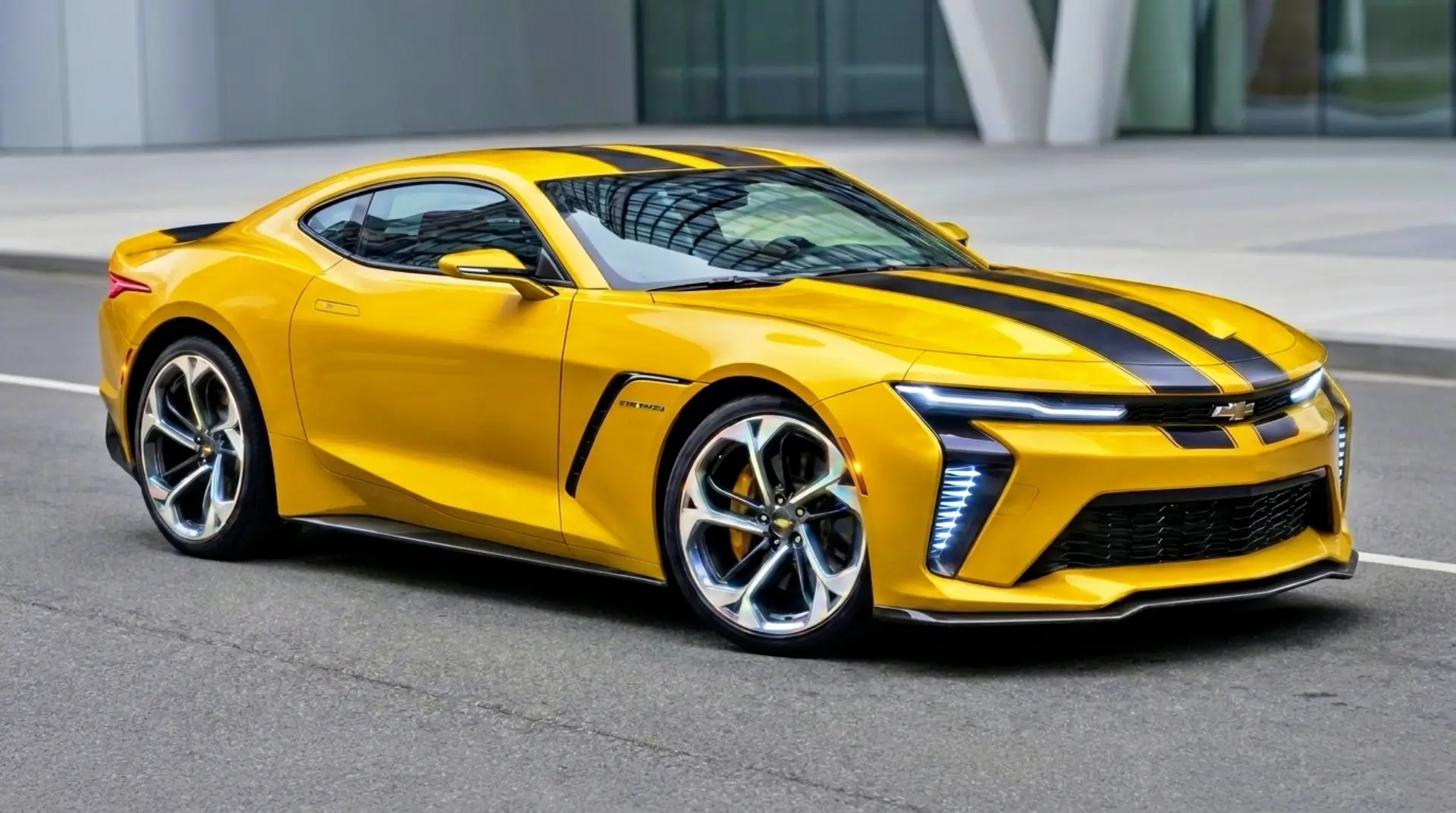
For decades, the Chevrolet Camaro vs. Ford Mustang rivalry has represented more than horsepower and acceleration.
It has been a battle of engineering, brand loyalty, aggressive styling, and American performance-car culture.
The Mustang has continued its journey while the Camaro disappeared after the 2024 model year, leaving Chevrolet enthusiasts wondering whether their favorite muscle car would ever return.
Now, reports suggest that a new Camaro could arrive for 2029, potentially with a four-door body style, rear-wheel drive, and a high-performance engine option.
If these reports prove accurate, Chevrolet could be preparing something much bigger than a simple replacement.
But can a revived Camaro actually steal the crown from the Mustang? Or is Chevrolet taking a risk that could divide its most loyal fans?
The 2029 Chevy Camaro Comeback: A New Beginning or a Risky Reinvention?
The previous-generation Camaro officially ended production after the 2024 model year. General Motors announced its retirement in March 2023, explaining that the sixth-generation model would reach the end of its production run. However, Chevrolet also made it clear that the Camaro story was not necessarily over.
That statement left the door open for a possible return.
According to automotive industry reports, the 2029 Chevrolet Camaro is expected to use an updated version of GM’s Alpha rear-wheel-drive architecture.
This platform could provide the foundation for a new generation of performance vehicles while allowing Chevrolet to share engineering resources with other GM models.
One of the most surprising rumors concerns the body style. Unlike previous generations, the next Camaro could reportedly feature four doors instead of two.
That would represent a major departure from the traditional Camaro formula.
Some enthusiasts may consider a four-door Camaro an unnecessary change. Others could see it as an opportunity to make the performance nameplate more practical and accessible.
The bigger question is whether Chevrolet can preserve the Camaro’s personality while introducing a completely different design philosophy.
For now, Chevrolet has not officially confirmed the production specifications, final body style, engine lineup, or launch date. These details should therefore be treated as reported possibilities rather than guaranteed features.
Ford Mustang Still Has the Muscle Car Advantage
While Chevrolet works on its potential comeback, Ford has continued selling the Mustang and maintaining its position in the American performance-car market.
The Ford Mustang benefits from something the Camaro currently lacks: an uninterrupted modern production presence. Its recognizable styling, rear-wheel-drive configuration, and available V8 power have helped maintain its identity across multiple generations.
The current Mustang lineup offers different personalities for different buyers. The EcoBoost model delivers turbocharged performance, while the Mustang GT brings the traditional V8 experience. Higher-performance versions provide even more track-focused capability.
For enthusiasts who enjoy driving rather than simply looking at performance figures, the availability of a manual transmission remains an important part of the Mustang experience.
This is where Chevrolet faces a serious challenge.
The 2029 Chevy Camaro vs. Ford Mustang comparison will not simply be about which car produces more horsepower. Chevrolet must convince buyers that its returning performance model offers something genuinely exciting.
Ford already has an established customer base, a recognizable product identity, and a performance-car reputation that has survived decades of competition.
Chevrolet will need more than a nostalgic badge to change that equation.
Engine and Performance: Could a V8 Bring Camaro Back to Life?
Nothing generates more excitement among traditional muscle car fans than the sound and character of a naturally aspirated V8.
That is why engine rumors surrounding the 2029 Chevy Camaro V8 have attracted so much attention.
Reports suggest that Chevrolet could offer multiple powertrain choices, potentially including a turbocharged four-cylinder entry-level engine and a more powerful V8 variant.
A manual transmission has also been mentioned in reporting about the next-generation model.
However, Chevrolet has not released official horsepower, torque, acceleration, or engine specifications for the rumored Camaro.
The possibility of a modern small-block V8 is particularly interesting. General Motors continues to invest in its small-block engine family, giving the company a potential foundation for a new performance-oriented Camaro.
Ford, meanwhile, has already established the Mustang GT as a V8-powered competitor.
For Chevrolet, offering a compelling V8 option could be essential to winning back traditional Camaro buyers.
But horsepower alone will not determine the winner. Weight distribution, suspension tuning, braking performance, transmission response, and cooling capability will all influence how the two cars perform on the road and track.
A Camaro with impressive engine numbers but disappointing handling would struggle to recreate the reputation of its predecessor.
Design: The Biggest Battle Could Be Four Doors vs. Two
The most controversial aspect of the rumored 2029 Chevy Camaro redesign is its potential four-door configuration.
Historically, the Camaro has been recognized as a two-door performance coupe. Its long hood, aggressive proportions, muscular rear end, and low roofline helped define its identity.
A four-door version would need to approach styling very carefully.
Chevrolet could potentially create a fastback-inspired sedan with muscular shoulders, a wide stance, an aggressive front fascia, and a sporty rear profile.
The objective should be simple: make it look unmistakably like a performance car rather than an ordinary family sedan with a Camaro badge.
The Mustang has traditionally maintained its two-door identity, although reports in 2026 have also suggested that Ford is exploring a four-door Mustang derivative.
If both manufacturers expand their performance-car families with four-door models, the rivalry could enter an entirely new chapter.
Instead of simply comparing two traditional coupes, buyers could eventually choose between different body styles offering varying combinations of practicality and performance.
For Chevrolet, this could create an opportunity to attract customers who want serious driving excitement without sacrificing everyday usability.
But the design must deliver on its promise. A four-door Camaro that looks too ordinary could create more criticism than excitement.
Interior Technology and Everyday Comfort
Modern performance cars are no longer judged exclusively by their engines.
Today’s buyers also expect sophisticated infotainment systems, digital instrument displays, smartphone connectivity, comfortable seating, and advanced driver-assistance technologies.
The 2029 Chevrolet Camaro interior will need to reflect these expectations if the car is going to compete with the latest Mustang.
A modern dashboard with a large touchscreen, customizable digital gauges, supportive sport seats, and intuitive controls would make sense.
If Chevrolet chooses a four-door configuration, rear-seat space could become another important selling point.
This is an area where the new Camaro could potentially distinguish itself. Traditional two-door performance coupes often require compromises in rear-seat accessibility and passenger comfort.
A four-door design could offer more practical daily transportation while maintaining the performance character expected from the Camaro name.
However, Chevrolet should avoid turning the interior into an oversized touchscreen experience that sacrifices physical controls and driver engagement.
A performance car should still feel designed around the person behind the steering wheel.
2029 Chevy Camaro vs. Ford Mustang: Which One Has the Advantage?
At this stage, declaring a winner would be premature because the next-generation Camaro has not been officially unveiled.
Nevertheless, the two brands approach the competition from different positions.
The Mustang has the advantage of an established production lineup and a recognizable performance formula.
Chevrolet has the opportunity to return with a completely refreshed product that could attract attention through new technology, alternative body styles, and modern engineering.
The following comparison highlights what buyers should watch:
| Category | 2029 Chevy Camaro | Ford Mustang |
| Market position | Reported upcoming revival | Established production model |
| Body style | Four-door configuration reported | Two-door coupe and convertible |
| Engine options | Unconfirmed | EcoBoost and V8 options |
| Rear-wheel drive | Reported | Yes |
| Manual transmission | Reported possibility | Available on selected models |
| Performance specifications | Not officially announced | Established model specifications |
| Market reputation | Historic Camaro heritage | Long-running Mustang legacy |
The important distinction is that the Camaro information remains largely based on industry reporting, while the Mustang already has a production vehicle with published specifications.
Interestingly, the potential expansion of both nameplates into four-door territory could make the competition even more complicated.
Pricing and Value: Chevrolet Needs to Get the Numbers Right
Pricing could ultimately determine whether the 2029 Chevy Camaro becomes a genuine Mustang competitor or simply another enthusiast favorite with limited sales potential.
Performance-car buyers are increasingly sensitive to vehicle prices, insurance costs, fuel expenses, and maintenance. Chevrolet will need to offer a convincing balance between performance and affordability.
An entry-level turbocharged Camaro could attract younger buyers looking for an affordable rear-wheel-drive sports sedan or coupe.
A V8-powered version could target traditional muscle car enthusiasts willing to pay more for additional performance.
The biggest mistake Chevrolet could make would be positioning the Camaro too close to premium sports cars without delivering comparable engineering, equipment, and performance.
Official pricing has not been announced, so any estimated starting price should be treated cautiously.
Can Chevrolet Finally Steal the Crown?
The return of the Camaro could be one of the most interesting developments in the American performance-car market.
But Chevrolet faces a difficult balancing act. It must respect the heritage that made the Camaro famous while creating a vehicle that appeals to a new generation of buyers.
A four-door configuration might attract customers who previously overlooked the Camaro because of its limited practicality.
A powerful V8, rear-wheel drive, and an available manual transmission could also preserve the emotional connection that traditional enthusiasts expect.
Ford, however, is unlikely to surrender its position without a fight. The Mustang has already demonstrated that there is still an audience for traditional American performance cars.
The rivalry could become even more interesting if Ford expands the Mustang family while Chevrolet introduces a new Camaro with a different body style.
Ultimately, the winner will not be determined by marketing campaigns or nostalgic advertisements. It will depend on the actual driving experience, engineering quality, pricing, and whether customers believe the cars deliver something special.
The Muscle Car Rivalry Is Far From Over
The 2029 Chevy Camaro vs. Ford Mustang battle could become a defining moment for American performance cars.
Chevrolet has an opportunity to bring back an iconic nameplate with modern engineering and potentially greater everyday practicality. Ford has the advantage of an established Mustang lineup and decades of continuous brand recognition.
If Chevrolet delivers a compelling V8 option, engaging driving dynamics, modern technology, and an attractive price, the Camaro could become a serious challenger again.
However, there is one question Chevrolet cannot ignore: will Camaro enthusiasts accept a four-door performance car wearing a name historically associated with two-door muscle?
That answer could determine whether the next Camaro becomes a celebrated reinvention or one of the most controversial decisions in Chevrolet history.
One thing is certain: the American muscle car rivalry deserves another chapter, and the 2029 Camaro could make it more interesting than ever.