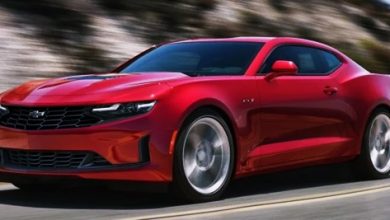
2027 Chevrolet Camaro ZL1
The automotive world is currently standing at a jagged crossroads, and the view toward 2027 is causing a fair bit of vertigo.
For decades, the recipe for a Chevrolet Camaro ZL1 was simple: take a massive, supercharged V8 engine, wrap it in a predatory two-door silhouette, and ensure it made enough noise to wake the neighbors three blocks over.
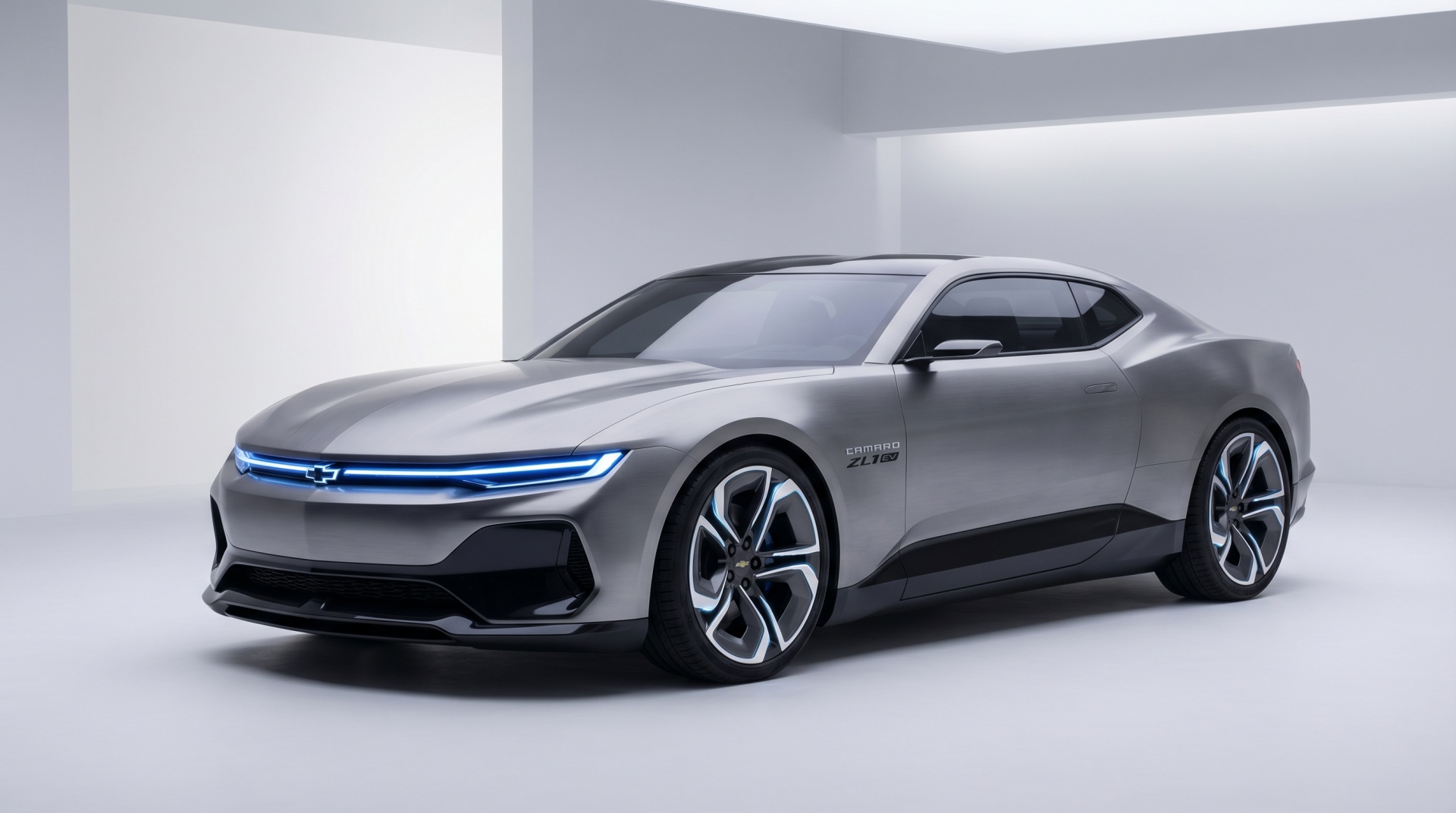
But as the “Last Call” for internal combustion fades into a hum, a new titan is emerging from the shadows of Detroit.
The rumored 1,000 HP ZL1 EV is no longer just a fever dream of Silicon Valley enthusiasts; it is the centerpiece of the Chevrolet Ultium platform strategy.
But as we look at the spec sheet of this upcoming electric muscle car, a haunting question lingers in the exhaust-free air: Is Chevrolet saving the Camaro brand, or is it merely wearing its skin like a high-tech trophy?
The Electric Shocker: 1,000 Horsepower and a Whole Lot of Silence
Let’s address the elephant in the room—the numbers. We are looking at a projected 1,000 HP ZL1 EV that promises to make the old LT4-powered beasts look like they’re standing still.
In the world of the performance EV, horsepower has become cheap, but the delivery remains expensive. With instant torque available from zero RPM, this new-age ZL1 is expected to vaporize tires and clock a 0-60 mph time comfortably under two seconds.
For the 2027 Chevy Camaro ZL1, moving to an electric drivetrain isn’t just about eco-consciousness; it’s about absolute dominance.
By utilizing a tri-motor setup similar to the Hummer EV but tuned for track-slaying dynamics, Chevrolet is aiming directly at the Tesla Model S Plaid and the Lucid Air Sapphire.
However, muscle car fans have never cared about just the “how fast”; they care about the “how.”
The Ultium Architecture: More Than Just a Battery Pack
The backbone of this transition is the Chevrolet Ultium platform. This modular battery and motor system allows for a low center of gravity that no internal combustion engine could ever hope to replicate.
By placing the weight of the batteries between the axles, the 2027 Chevy Camaro ZL1 could potentially become the best-handling vehicle to ever wear the bowtie badge.
Technical Expectations for the New Era:
- Battery Capacity: Expected 100+ kWh pack with 800V fast-charging architecture.
- Powertrain: Tri-motor AWD system with torque vectoring capabilities.
- Weight Management: Extensive use of carbon fiber to offset the massive battery weight.
- Aerodynamics: Active aero elements designed to keep a 5,000-lb car glued to the tarmac.
While the technical prowess is undeniable, the shift represents a total departure from muscle car heritage. A ZL1 was always a mechanical symphony—the whine of the blower, the kick of the shifts, and the heat radiating off the hood. In the 1,000 HP ZL1 EV, that symphony is replaced by the digital whir of inverters.
The Identity Crisis: Two Doors or Four?
Perhaps the most controversial rumor surrounding the 2027 Chevy Camaro ZL1 isn’t its fuel source, but its shape. Industry insiders suggest that to make the ZL1 a viable competitor in the modern market, it may morph into an electric performance sedan.
The logic is simple: pure two-door coupes are a shrinking segment. By transforming the Camaro into a sleek, four-door fastback, Chevrolet can offer a performance EV that appeals to families who want a Tesla Model S Plaid alternative with actual personality.
But to the purist, a four-door Camaro is an oxymoron. It feels less like a pony car and more like a high-performance appliance.
If Chevrolet moves away from the iconic coupe profile, they aren’t just changing the engine; they are rewriting the DNA of the nameplate.
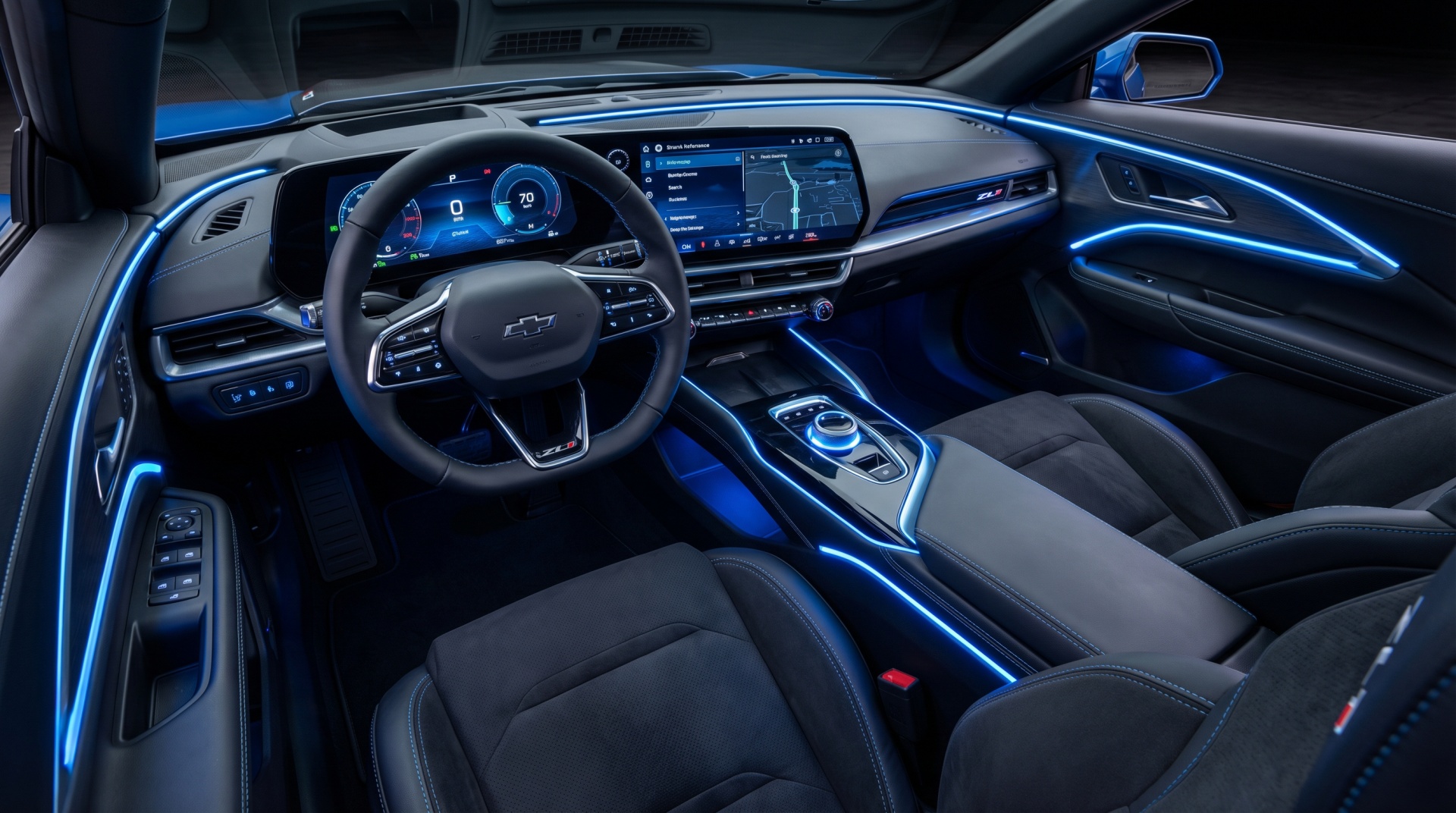
Can You Code “Soul” Into a Silicon Chip?
The “soul” of a car is a difficult thing to quantify. It’s the vibration in the steering wheel at idle and the way the chassis loads up under heavy throttle.
Chevrolet engineers are reportedly working on “Active Sound Enhancement” and haptic feedback systems to mimic the visceral feel of a V8 engine.
We’ve seen what the Dodge Charger Daytona SRT is doing with its “Fratzonic” exhaust system—essentially a giant organ pipe that bellows out synthetic roar.
If the 1,000 HP ZL1 EV goes this route, will it feel authentic or like a video game? The automotive soul is built on imperfection—the slight hesitation of a gear change or the smell of high-octane fuel.
When you replace those with seamless software, you risk creating a car that is mathematically perfect but emotionally vacant.
The Competition: Drag Strips and Charging Stations
Chevrolet isn’t acting in a vacuum. The 2027 Chevy Camaro ZL1 is entering a battlefield already populated by heavy hitters.
The Dodge Charger Daytona SRT has already set the tone for the electric muscle car segment, proving that fans will at least listen if the car looks “right.”
Meanwhile, Ford continues to play both sides, keeping the Mustang GT’s V8 alive for another generation while pushing the Mach-E for the masses.
By jumping straight to a 1,000 HP ZL1 EV, Chevrolet is taking the most aggressive stance of the “Big Three.”
They are betting that by 2027, the novelty of the internal combustion engine will be overshadowed by the sheer, terrifying performance of the Ultium drive units.
Evolution or Extinction?
Is Chevrolet killing the soul to save the badge? In many ways, yes. The “soul” of the ZL1 as we knew it—a loud, gas-guzzling, atmospheric hooligan—is effectively dead.
You cannot replicate a 6.2-liter supercharged V8 with magnets and copper wire, no matter how much “fake noise” you pump through the speakers.
However, the “badge” represents more than just a type of engine. It represents Chevrolet’s commitment to being the fastest thing on the block.
In that sense, the 1,000 HP ZL1 EV is the ultimate survivor. It adopts the only technology capable of pushing the performance envelope further than the ICE ever could.
The 2027 Chevy Camaro ZL1 will likely be the most capable, fastest, and most technologically advanced vehicle in GM’s history.
It will win the drag races, it will set the Nürburgring lap times, and it will look stunning under the neon lights of a charging station.
We might miss the roar of the old world, but if the choice is a silent, 1,000-horsepower monster or no Camaro at all, most of us will reach for the charging cable.
Key Takeaways for the 2027/2028 Cycle:
- The Power Peak: The 1,000 HP ZL1 EV will likely be the most powerful factory Camaro ever produced.
- The Platform: Shared Chevrolet Ultium platform technology ensures rapid charging and massive range.
- The Market: A shift toward an electric performance sedan could broaden the Camaro’s appeal beyond weekend drag racers.
- The Legacy: While the V8 engine is gone, the ZL1 name will continue to signal the pinnacle of Chevy performance.
The 2027 ZL1 isn’t a funeral; it’s a rebirth. It’s just going to be a lot quieter than we expected.